Sub-Total: $0.00
Integrated Pest Management and Beneficial Insects
It has been a while since my last post. What an incredibly busy summer it has been, and challenging trying to expand our little micro-farm during this drought.
Every time I am out in the fields I am observing and full of wonder at the amount of life happening all around this little chemical free ecosystem we are creating. I am always taking pictures thinking, “I should do a blog post about this!” But time slips away from me. So I thought I would dash off a quick update.
We are adding to our hedgerows of shrubs, and strips of plants native to Minnesota. This is part of an integrated pest management system. The native flowers and plants evolved with the insects in this area, and so they attract a wide array of insects, many of them beneficial insects. What is a beneficial insect? These are insects which often pollinate and prey on insects which damage your flowers or vegetables. They fight our garden pests!
A commonly known example are lady bugs. They eat aphids on your plants. But there are many varieties of parasitic wasps and wasps which prey on garden pests, but they need a better PR person to be as loved as the lady bugs, wink wink.
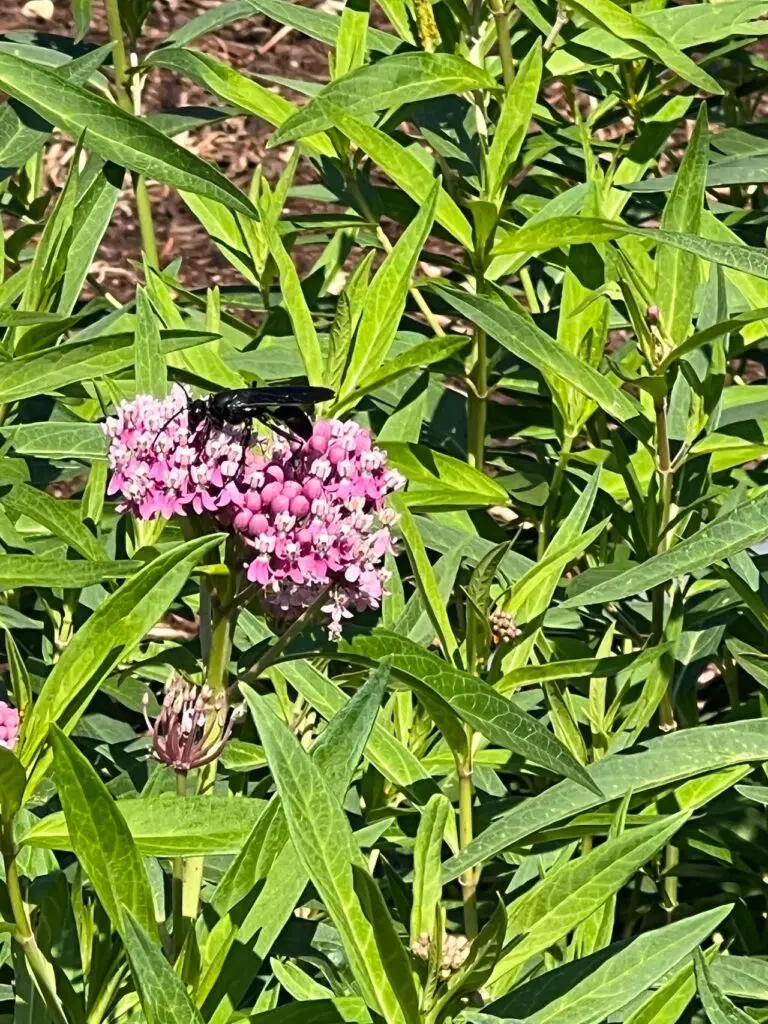
I just took these photos of several great black wasps on the rose milkweed. These are pollinators! This variety is not parasitic, but they do prey on crickets, katydids, and grasshoppers for example. The males do not have stingers, but the females do. However, as with most all bees and wasps, they typically only sting when they feel threatened. I walk past them daily and they pay me no mind.
The hedgerows also encourage birds to nest and frequent the garden, eating pests as well. Many of you might be battling Japanese Beetles this time of year. By attracting natural predators of the beetle it helps reduce our time hand picking them into a bucket of soapy water, and we avoid any pesticides which could harm beneficial insects. Birds that prey on the beetles include sparrows, robins, cardinals, starlings and woodpeckers, all of which we have observed here at Iron Butterfly.
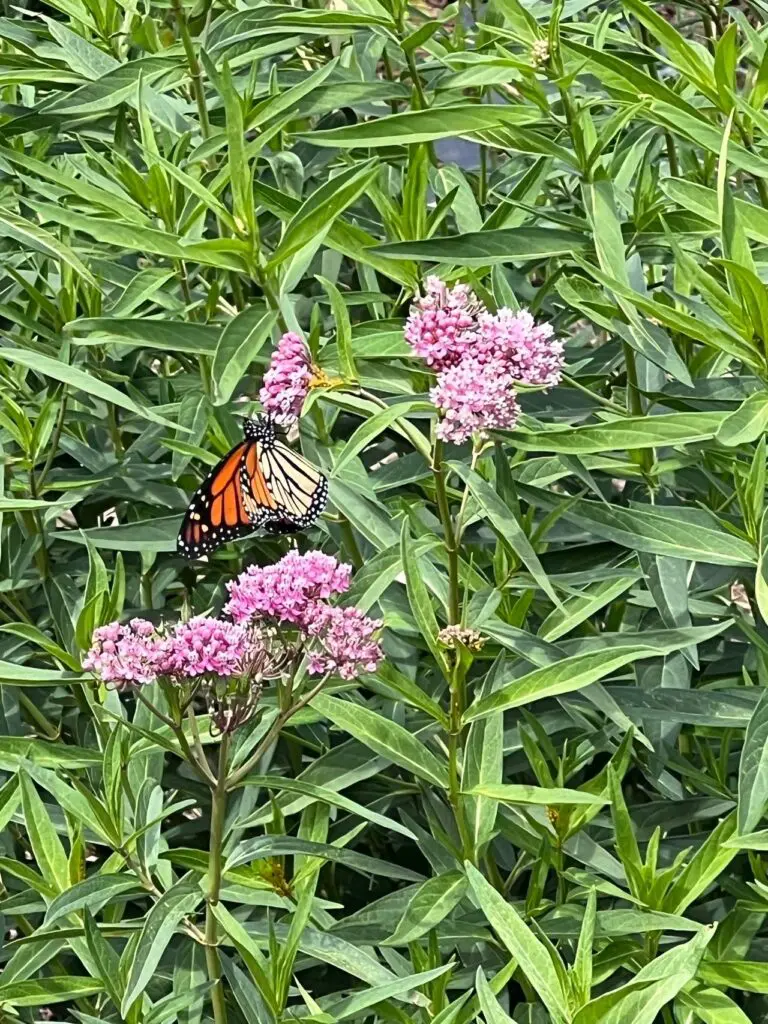
Last but not least, our beloved monarchs LOVE the Rose Milkweed. We just planted this patch in the spring, and it apparently is very happy in this spot as it is about three feet tall already! Consider adding native plants to your landscape, and enjoy quiet time watching these beautiful winged visitors. Prairie Moon Nursery is a good supplier of local natives, as well as yearly spring sales by Quarry Hill and local gardeners.
Signing off for now, thanks for sharing in the beauty of Iron Butterfly. Deb