Sub-Total: $0.00

A Cat in Water
Minnesotans grow up on the water. Lakes, rivers, streams. I however, am a bit like a cat in water. My dad almost drowned as a child, and so we did not have a boat or a cabin. I grew up on the farm, and one of my foundational experiences with water was to go to swimming lessons at the outdoor pool in St. Charles as a little girl. Grandma drove us, early in the morning to the pool, where it was cold….and wet. I learned to swim, and I learned that I didn’t like being cold and wet.
March 22 was World Water Day, and the University of Minnesota Alumni magazine had several really great stories about our water in Minnesota. Compared to when I grew up, Minnesota is getting warmer and wetter, yet there are water supply issues in Minnesota. We are drawing water out of aquifers at a level that is not sustainable.
You might ask, if it’s raining more, doesn’t that rain water just recharge the aquifers? Not if it lands on hardscaped cities, where it get funneled away over concrete, taking contaminants with it that end up in the streams, rivers, and oceans. And not if it lands on bare ground that has been tilled with no living roots in the soil. The little water that is able to soak in to the ground and recharge those wells also brings contaminants with it.
Mother Nature’s original elegant design for us were the Minnesota prairies with plants and roots that went down 5-15 feet into the soil acting like a giant sponge! Lawns only have roots a couple inches deep; think rolls of sod, so soil is compacted and water runs off instead of soaking in. Rain lands on the prairie flowers and grasses and it doesn’t roll away, it soaks in, because the deep roots combat compaction, and the roots filter the contaminants before the water gets to the aquifer.
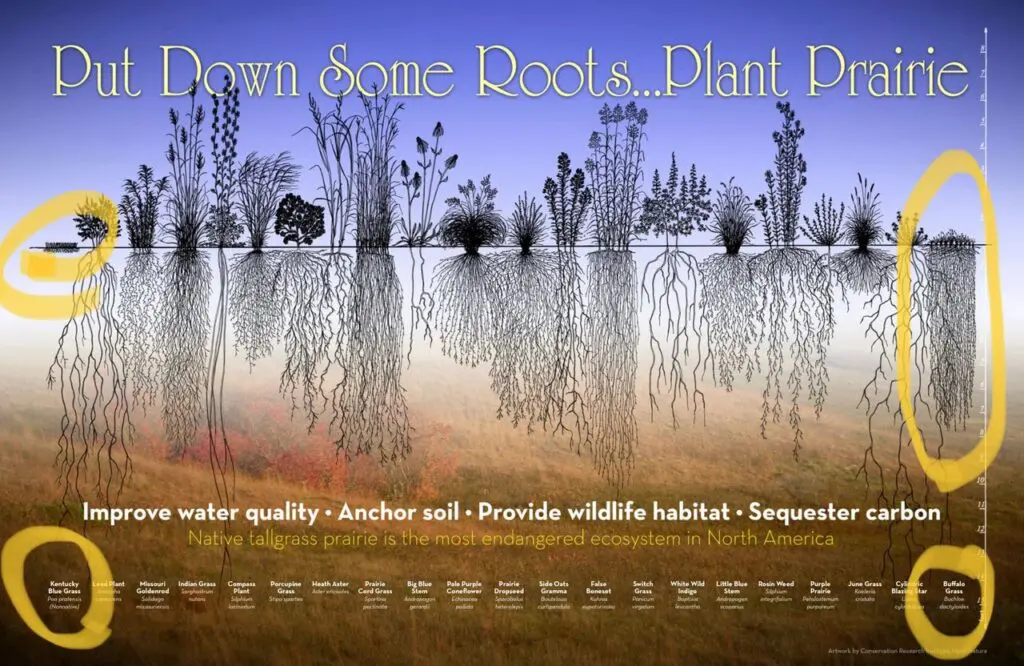
Image from the Minnesota DNR website.
Despite Minnesota having overall more rainfall each year, it tends to come in excess during spring, and then be more drought like in the summer. Neither are good for farmers, or homeowner’s landscapes. Traditionally farmers in Minnesota have been concerned about draining excess water away from their fields. But now, some farmers are starting to re-contour the land to slow down runoff from the fields and help water soak in. They are capturing the runoff in man made ponds and then using that water later for irrigation during the dry spells. This is a permaculture concept, and can be applied on a large or small scale. We have started recontouring our land, and it is a goal of ours at Iron Butterfly Flower Farm to implement water capture systems for resiliency, and continue to plant native prairie plants.
What can you do? Replace some grass lawn with native prairie flowers and grasses. Lawns are deserts to pollinators. Nothing to eat, no habitat for wildlife, using up precious water from the aquifers, and oftentimes soaked in chemicals to kill weeds, which also kills all the good microbes in the soil. Just like our brave little seeds we talked about last time that are alive and respirating as they wait for their moment, the soil is alive, teaming with microbes that are critical at making nutrients in the soil available to plant roots. Those deep prairie roots also sequester carbon from the atmosphere into the soil, combating climate change.
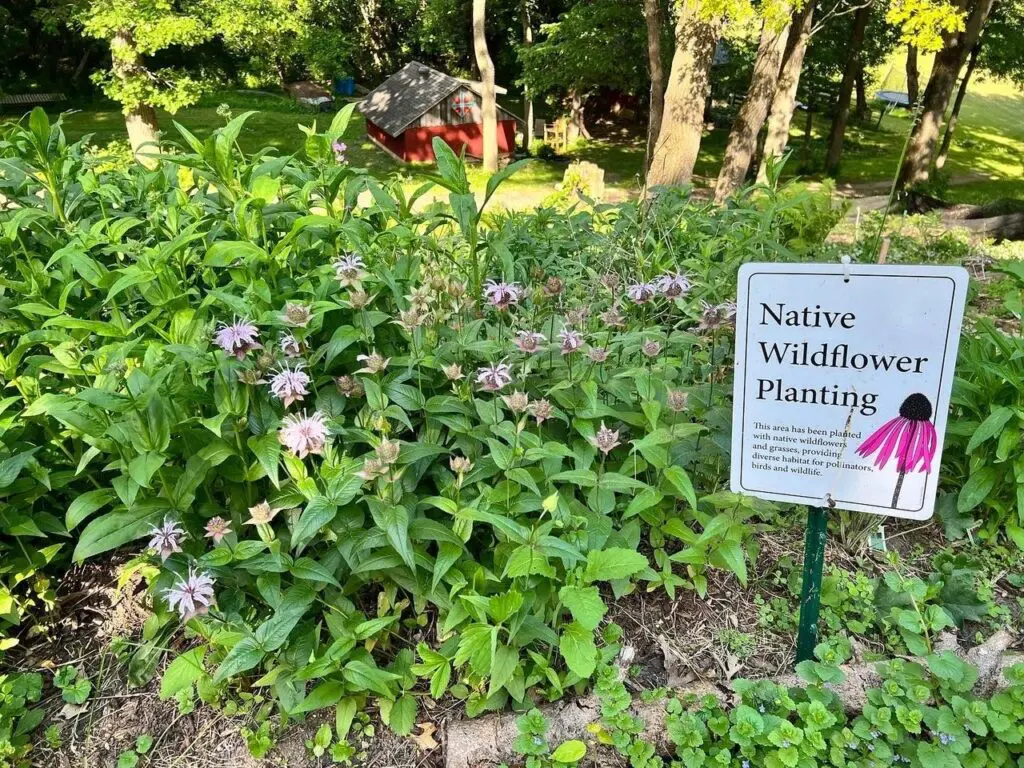
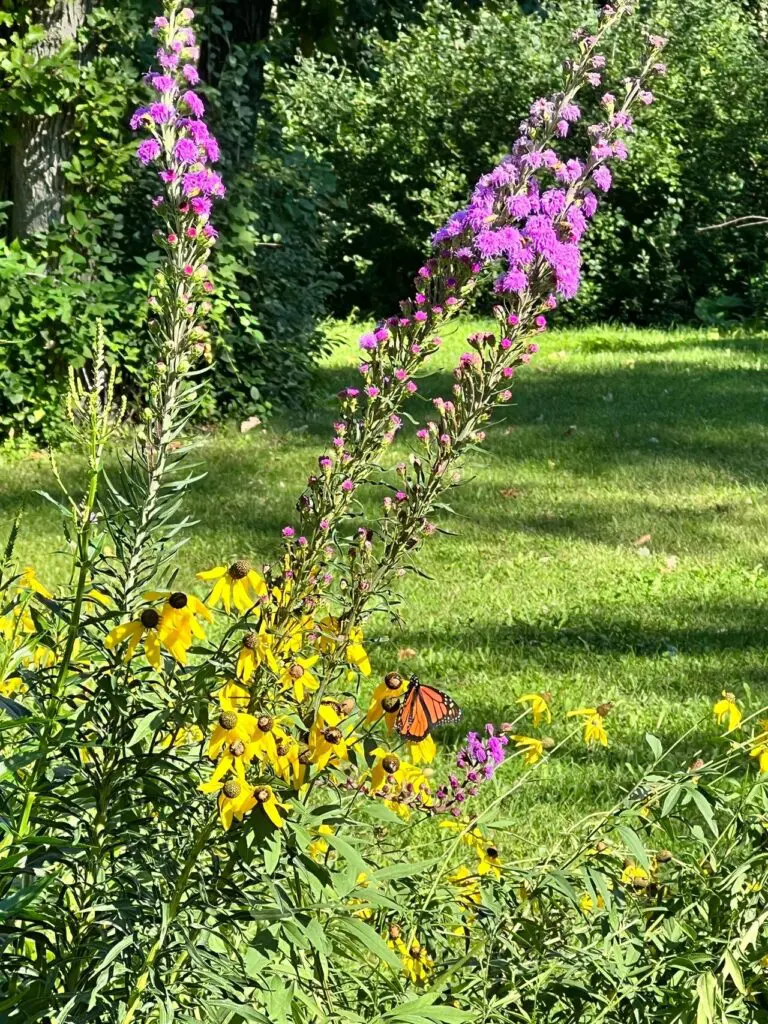
Above two images are native prairie plantings at Iron Butterfly Farm. More to come!
Buffalo Grass is a native prairie grass that only grows to six inches tall, but has roots that go into the soil 8 feet deep! And the U of MN is experimenting with a perennial grain crop for farmers called Kernza. They only plant it once, and harvest from it for five years. In the meantime the roots grow ten feet into the soil, protect their fields from being washed away, feed the microbes in the soil, fighting compaction, and filter contaminants before they reach the water well aquifers. Native plants are more resistant to flooding and drought. Farming with perennial grain or perennial native flowers means you don’t have to worry about your fields flooding in the spring, the plants are already established, there’s no seed to wash away.
Farmers are starting to plant strips of prairie and hedgerows again like the old days. They provide wind breaks, deep roots, habitat for birds which can eat pests on the crops, and the prairie plants attract beneficial insects that help to manage pests in the garden or farm. Tree and shrub roots, and native prairie plants also sequester carbon from our atmosphere into the soil, and the flowers provide for our pollinators, add beauty, and can also be used as good cut flowers for a country bouquet.
Farmers love the land. I think farmers are going to be some of the real heroes of climate change as we know better and do better, and funny enough, in many ways go back to the way things were done years ago. Iron Butterfly is just a tiny micro-farm, but the big guys and gals in farming in Minnesota are starting to make a huge impact, slowly but surely.
Water is life, but even on beautiful hot sunny days, the thought of going for a swim makes me cringe. Insert mental image of cat in water. My gardens and fields are my happy place. That’s where you’ll find me most of the summer. Putting in more hedgerows, native prairie plants, and perennial flowers. I keep telling the boys, “Once we get these in, then we just become caretakers. We don’t have to keep replanting.” They shake their heads at me and smile.
Below images are the Iron Butterfly Rental House, and last year, 2022, we put in trenches to capture the many many inches of rainfall that came off the roof, and slow it down to soak in. Then we planted native prairie flowers and grasses.
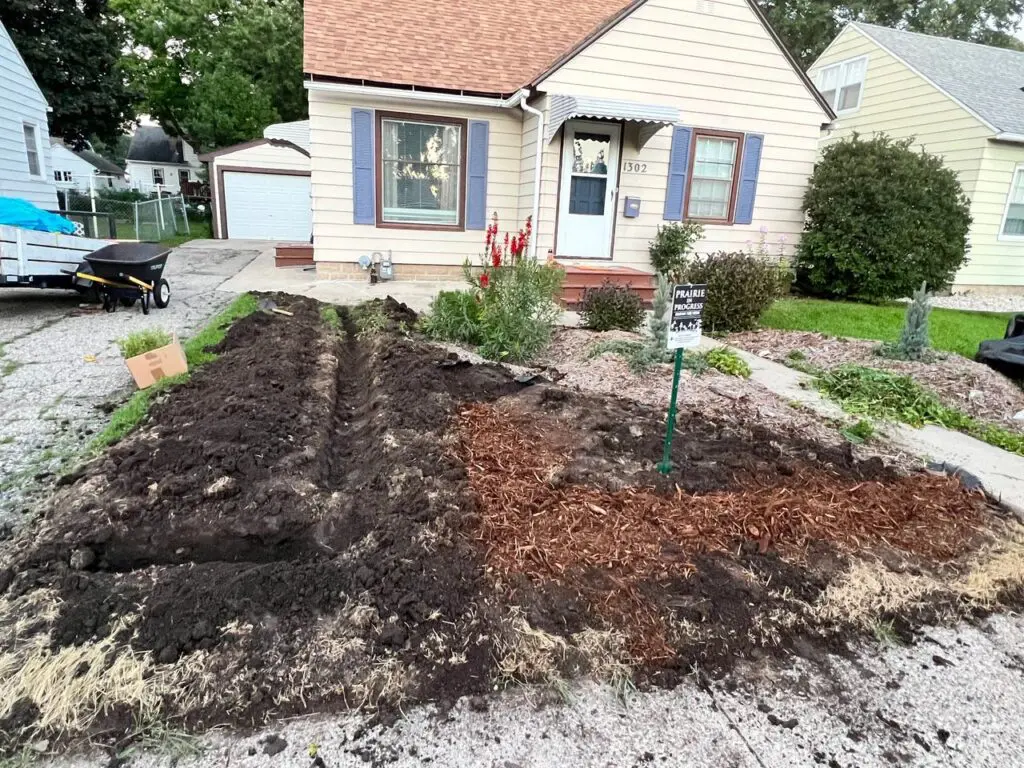
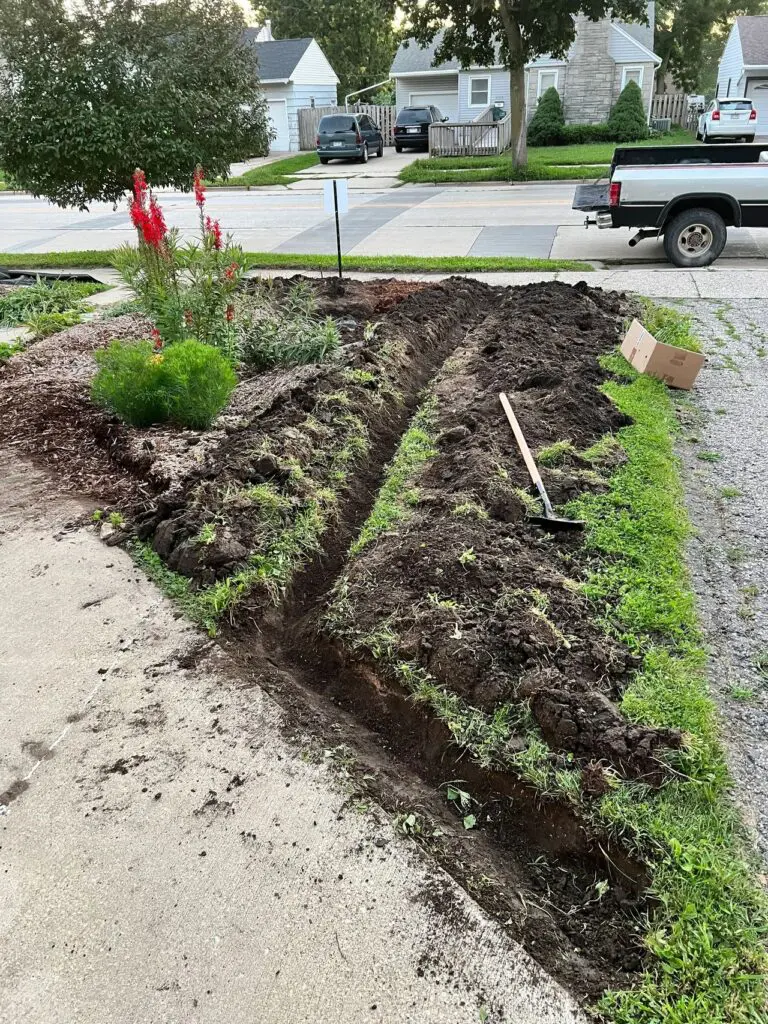
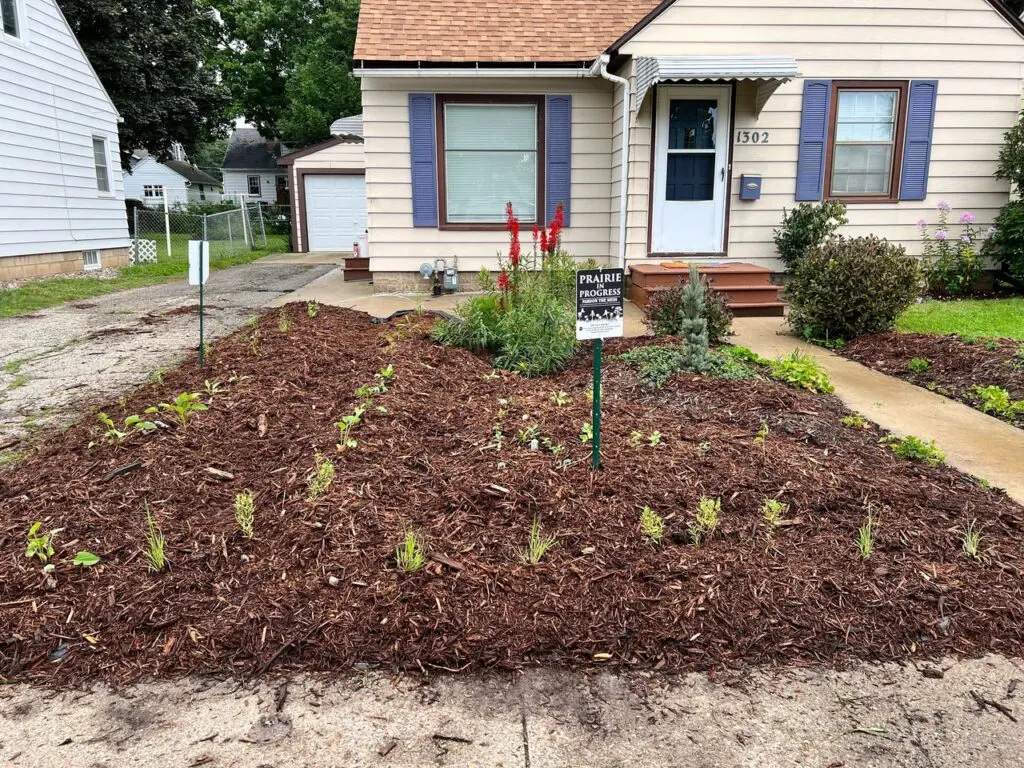
Now this former lawn no longer needs watering from the aquifers, it captures the rain water, filters it, creates habitat for pollinators, sequesters carbon into the ground, filters ground water, and doesn’t need mowing!